Showing posts with label brown trout. Show all posts

Thursday, May 17, 2012

The Not So Super Ant


Original Super Ant
Two summers ago I put up a post about a simple terrestrial pattern dubbed the super ant.  The super ant is a ungainly creation consisting of just three materials - foam, hackle and thread. It was a creation of my buddy Rick, during a late night tying session in our West Yellowstone cabin, fueled by one too many servings of "cabin punch".  This jumbo sized attractor pattern scored big time on fish in the West Yellowstone area.  The browns on the meadow section of Gibbon River fell particularly hard to its charms.

Super Ant Country
When I brought the pattern home to New Jersey it worked well most of the time for warm water species, but our trout here on the east coast sometimes cast a suspicious eye upon the pattern. They would often rise to inspect the fly, sometimes following a good distance downstream, before ultimately refusing the offering. They were definitely interested, but there was something about the pattern they were not sure of.

Super Ant Redux
As it turns out, it appears that the "super" in the super ant was turning fish off.   Downsizing the pattern has made it much more effective on our east coast trout.  It has also greatly improved its hooking abilities on small mouthed panfish as well,  which sometimes had a little difficulty choking down the original pattern.  The sample pattern I was given was tied on an old, discontinued Mustad barbless hook (3257B). It just so happens that I have thousands of these funky, old irons lying around. This hook was supposedly discontinued because of its poor hooking abilities. Although the hook held well, it was said to have penetration problems due the pronounced hump in the point. I have used the hook for a while now and have not observed any issues with penetration, so I am continuing to use it (I have to do something with them).  Another option in the same style of hook would be the Partridge Roman Moser (CS27) barbless dry fly hook (also discontinued, but easier to find). In the end, any old dry fly hook, barbed or not will work just fine.


This batch was tied up using some quick sight ant bodies I had lying around.  To get the hi-vis indicator tips, I simply tinted the white sections with permanent markers in various colors. The standard white works well enough but in some light conditions a little bit of color improves visibility on this low riding pattern.


In addition to the not so super ant I also tied up a few not so super bees with some foam bee bodies I found lying in the same drawer. I have a feeling the bluegills are going to tear these up!

Recent victim of the Super Ant

Friday, May 11, 2012

The Sulphurs are Flying!


Just a quick post for the local folks.  The Sulphurs have been around in dribs and drabs for a few days now, but last night they were out in numbers that had the fish looking up!   The bug pictured was on the small size most were considerably larger (as large as size 12!).  The fish ate good last night!


Usually, I would have more fish porn but I forgot the camera.  I took my iPhone on the water (which I never do) but I almost dropped the damn thing in the drink taking this shot, so that was the end of the pics!  I need to invest in a waterproof case...

This water was boiling with fish an hour after this photo was taken!


Thursday, May 10, 2012

Farmington River


I recently took trip to Connecticut's famed Farmington River with a group of friends.  We headed up to the river on the tail end of a nor'easter, so we had some adverse weather and water conditions to deal with.  Despite less than ideal conditions it turned out to be a great trip.


There were plenty of chunky little rainbows to be had.  They were everywhere and eagerly took our nymphs and streamers in the morning and rose to Hendricksons and caddis in the warmer afternoons.  The rainbows averaged 12 to 14 inches with the largest nosing up to about 16 inches.  They fought surprising hard for their size.


 The brown trout averaged a inch or two less and were just as abundant.   I managed to hook a few larger browns in the 20" class, while fishing streamers in some of the deep runs and pools, but they got the best of me and never made it to the net.


The fishery folks on the Farmington have an interesting way of tagging fish to identify when they were stocked.  The small recently stocked brown trout all had this green laser etch behind their right eye.  I have never seen this method of tagging before.


We managed to have one phenomenal afternoon when my buddy Rick and I got into a riffle that was just teeming with fish.  There were actually more fish in this one spot than I have ever encountered on a river before.  We discovered that they were staged in that riffle taking emerging Hendricksons.  Fishing soft hackles we took fish on almost every casts for hours right up until dark.  The numbers of fish caught was astounding, between the two of us it was one of those rare "100 fish days".


Fishing two fly rigs and catching two fish at a time was just as common as catching one!  More often than not, everyones rod was bent over at the same time.  Since we left fish biting the night before, we returned the next morning morning with another friend and found the fish there again.  This time they appeared to be taking spent little yellow crane flies.  A partridge and yellow soft hackle did the trick and we did it all over again.   This had been my first trip to the Farmington, I can't wait to head back!


Sunday, May 6, 2012

Not your typical trout stream resident!


I was standing in the shallow water on the edge of the river, tying on a new section of tippet, when I felt something heavy climbing over my wading boots.  I looked down and almost jumped out of my skin when I saw this large snapping turtle clambering over my boots.  I had been standing motionless for a while watching a few rising fish on the opposite bank so I guess he figured I was part of the landscape.  Once my heartbeat returned to normal I left this fellow to his own devices and I proceeded to catch one of those rising fish.


Monday, March 26, 2012

"Winter" Fishing Wrap Up


This blog has been far too quiet lately.  My apologies to my regular readers.  Fortunately I have been busy fishing as well as working.  I thought I would share some images from some of my winter trips to the river.  We were blessed with a extremely mild winter this year.  I was able to fish in shirt sleeves or a light jacket for most of the days between December and the present.  Today we have seasonable temperatures in the mid fifties and it feels down right chilly!


The fishing this winter was phenomenal!   Although we experienced extremely high water during the spring, summer and fall, the lack of snow/rain this winter has really brought water levels down,  The low crystal clear water we typical experience in autumn has been with us all winter.  This mild weather has the bugs all confused as well.  Many hatches are several weeks early.  As it looks now we may miss our Hendrickson hatch completely as we suffer through three weeks of closed waters.


I had several months some of the best dry fly fishing I have ever experienced in New Jersey with loads of fish coming to the surface chasing our little black stoneflies.  This hatch has always been hit or miss because of weather and water conditions, but this year we had two solid months of consistent action on stoneflies.


There has been plenty of BIG fish as well.  My best this winter was a twenty six inch brown.  Unfortunately his picture will not be found on this blog because I was without a camera (my friends know that is a regular problem with me), but there are plenty of 22"-24" pictured on this post to make up for it.


Many of these big fish were taken on top but the largest were often taken dredging a nymph on a dark cloudy day.  This spring our rivers were chock full of suckers getting their spawn on.  Unlike some anglers, I have no aversion to matching that particular hatch so I am no stranger to sucker spawn patterns.  If its good enough for a fish to eat, its good enough for me to tie and fish!


When going down low effective patterns were my Yellow Stonefly Nymph, Cased CaddisChimarra Caddis and my trusty Pheasant Tail Anchor.  As far as dry flies went your basic black stone fly imitations produced well, the fish were not too picky.  But the biggest fish always seemed to rise to My buddy Lou's CDC Stone.  Water temps were high enough to get some great action on aggressively stripped streamers as well.


The last few days of the open season were the best.  Daytime temps in the seventies brought the water up into the mid fifties.  With temps like that the caddis and mayflies started popping.  I spent the last day of the open season fishing wet flies to very aggressive fish willing to chase down and absolutely smash the fly.  At the end of the day at dark I was treated to a caddis hatch and took several fish on Iris Caddis fished with movement in the film.


So my apologies again for the lack of posting but a man has to have his priorities.  Fishing will trump writing every time in my book!  I promise things will get back on track and you will hear a lot more from the Jersey Angler in the months to come.

Tight Lines!

Monday, February 6, 2012

Chimarra Caddis Larva

Chimarra Caddis Larva 
This bright orange/yellow caddis larva can be an important food source on some waters in my area during the late winter and early spring months.  As far as caddis larva go it is one of the smallest I will bother to imitate.  I tie them on a 3x short hook in sizes 16 & 18, but I know folks tie them smaller (typically 18-20).  The short shank hook allows me to maintain a good hook gap but still keep the body appropriately sized.

I was able to get out this week and enjoy some of the unseasonable warm weather.  This pattern and small patterns with bright orange hot spots produced well, indicating that the fish may be seeing some of these larva already.

Pattern Recipe:
Hook:  3x short larva hook
Thread:  8/0 Hot or Fire Orange for body/Brown for head
Under Body: Orange thread
Markings:  Black marker on thread before wrapping floss
Abdomen: Yellow floss spiraled up hook shank allowing the underbody to show
Thorax: Brown thread
Legs:  Squirrel dubbing

Tying Instructions:

  • Cover the hook shank with orange thread wrapping down the bend of the hook, building up a thicker area over the barb of the hook.  
  • Tie in a piece of yellow floss at the bend of the hook and advance the thread to the eye, whip finish and cut off.
  • Attach brown thread at the hook eye
  • Dot the back of the fly with a black marker a few times
  • Advance the floss towards the eye in open spirals allowing the orange underbody to show through and tie off at the hook eye.
  • Dub a small about of squirrel fur on thread and create the flies legs by making several wraps, pulling the fibers down after each wrap
  • Create a neat thread head, whip finish and cut off thread.
  • Apply a small drop of clear cure goo to the top of the thorax and cure with a UV light to keep the fibers pointing downward
Once this pattern gets wet the colors will change closely resembling that of the natural insect.

A healthy winter brown trout taken on a Chimarra larva pattern


Saturday, November 12, 2011

Reflections of Summer


Summer is officially over, for the first time since last winter I froze my ass off while out fishing.  It wasn't extremely cold but I was still in summer mode and did not dress as warmly as I should have.  The fishing was good, but I am already missing those golden days of summer.  As I stood in the rapidly cooling water, with melting snow slowly dripping down my neck, thoughts drifted back to warm sunlit days on the Madison River.


Three Dollar Bridge can get a little crowded (by Montana standards, not New Jersey) on a July afternoon but the fishing can be remarkably good.  I will usually walk a distance from the parking areas before fishing, but on this day I just walked to the river bank and started fishing my way upstream.  No doubt, fishing in the footsteps of many anglers who proceeded me.  It did not seem to make a difference though.  The fish came very regularly to small nymphs drifted through likely looking lies.


Some big...


Some small...

But they were plentiful and in a 100 yards of river I bagged a dozen or more fish under a blazing mid day sun. Not a bad way to spend an afternoon.  But there were signs that this section of river is maybe seeing too much angling activity.  More than once I observed fish that should signs of being hooked a few times. Then I caught this emancipated looking fellow.


More snake than trout, not a very healthy looking fish, I doubt it survived the summer.  This was the only day we fished that section of river.  After that we looked for water off the beaten track to give these fish a break.  More anglers should do the same.  The Madison is a big river with fish everywhere.  It still amazes me how many people (myself included) flock to this particular place, and how good the fishing could be inspite of it all.

Saturday, November 5, 2011

Fall Colors


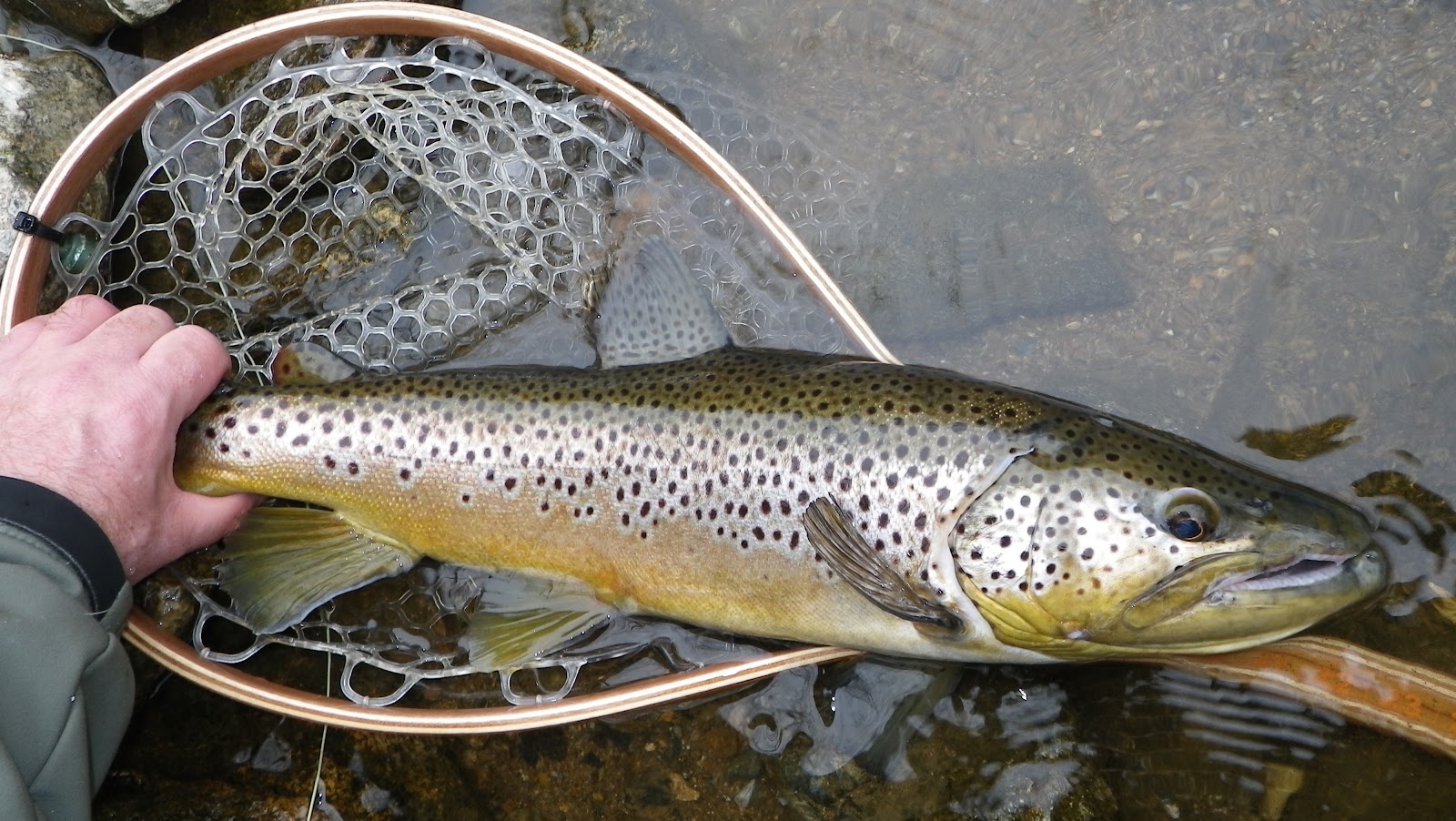
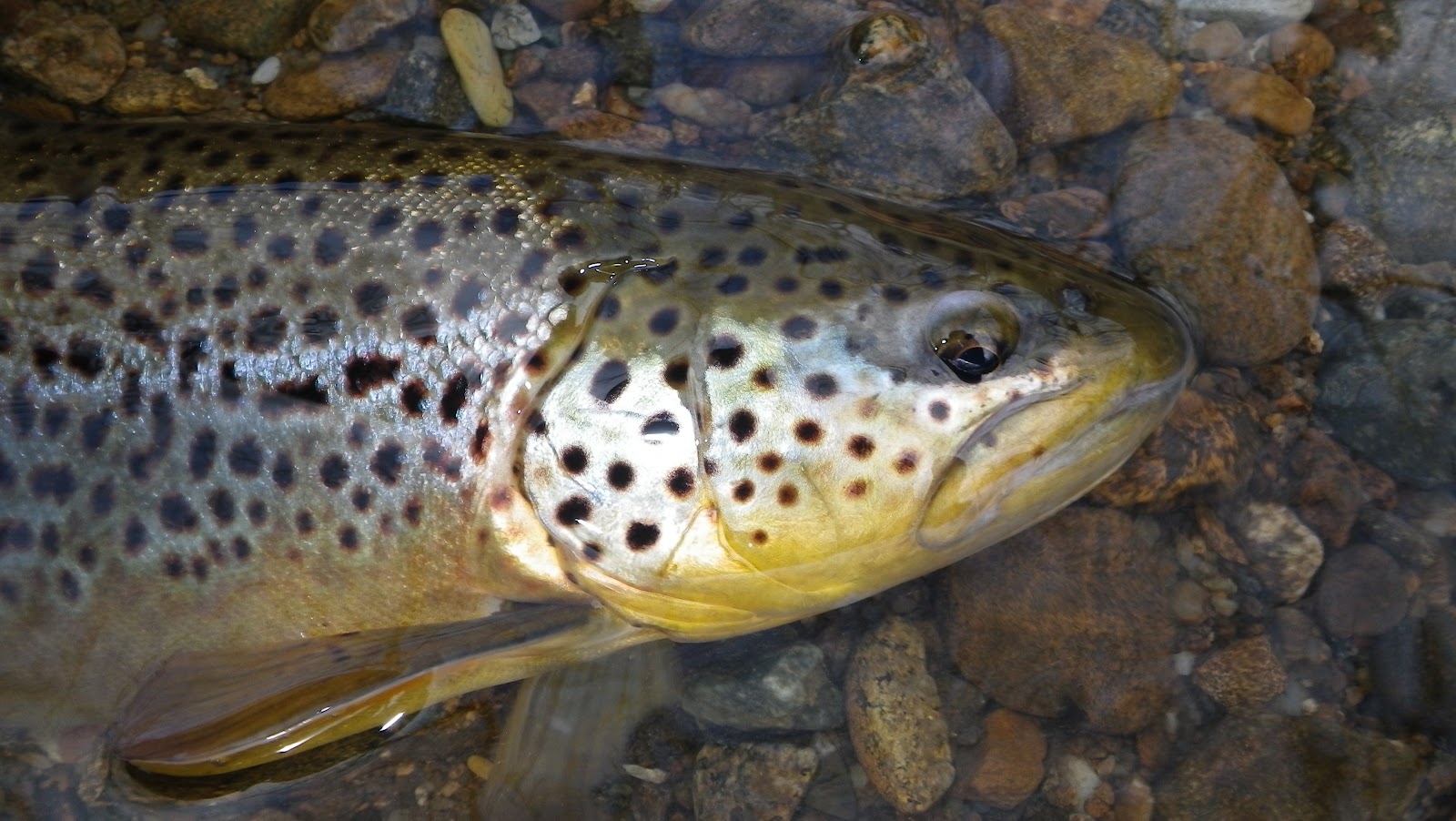
Forget the foilage , this is what fall colors are all about!

Tuesday, May 31, 2011

Catch and Release


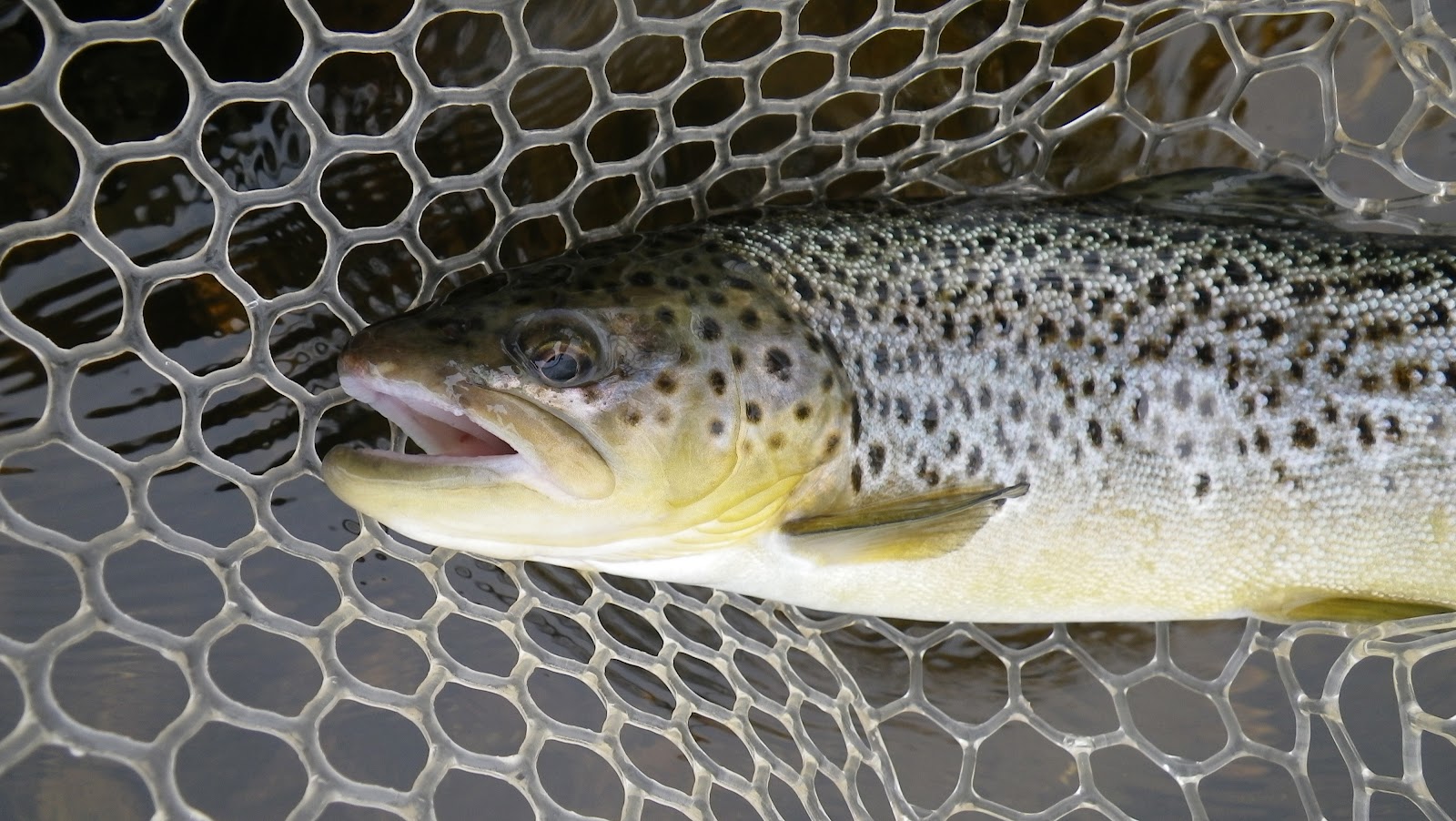
Over the past few months I have caught and released this fish on four seperate occasions.  She has always been caught in the same spot despite the fact that she has been released several pools down stream from where she is originally hooked.  She always does the same thing, a few quick bursts up stream than an about face and a mad rush down stream that requires you to beat feet after her or she's gone baby gone!  The fish has a damaged mandible from a former battle and and a very recognizable spot pattern on the cheek.  The picture above is from our most recent encounter this weekend, when she took a big golden stone nymph (more on that in a future post).

The first time we met it was late winter and it was far too cold to be messing around with a camera so she was quickly sent on her way but I made a note of the water she was in and that damaged jaw.  On that occasion she was tricked by a green rockworm imitation.

Our next meeting took place right before the season opener.  This time a pink san juan worm with a gold bead did the trick.  I saw this take as she rose up from her spot in front of a log and picked off the fly mid current.


Our third encounter took place a few weeks ago during a high water event.  She was in the same spot as always.  She is never visable but you just know she is down there somewhere.  This time a heavy cased caddis imitation fooled her.


I am going to bid her farewell for the rest of the season and leave her be.  Four times in one season is more than enough...

Thursday, March 24, 2011

Winter is Finally Over!

This was a long tough winter for me.  In a normal winter I will usually get a dozen or more trips under my belt before the season closes before opening day in early April.  This year it was looking like opening day would be my first time on the water.  As luck would have it last Friday my scheduled cleared at the last minute and I was on the water by noon.  The weather was unseasonable warm but the water was high, just coming down from flood stage earlier in the week.  Not perfect conditions, but with the season closing in two days there really wasn't another choice.


The day started a little slow but as the water warmed the fish turned on.  It was a Czech nymphing game as the high water had the fish pushed to the banks and in the softer water around the breaks, but the fish were there and they were eating.  The high roiled water allowed you to fish close most times not even getting your feet wet.


The fish were in great shape and looked like they passed through the winter in grand style.


Most of the fish were rainbows, but as the water warmed the browns started to wake up.


This is a new pattern this year and it produced very good.  I'll put up the pattern recipe in a few days.


The fish of the day was a big hen brown who ate the fly right on the bank in front of a log. 


With any luck there would be one more trip out before the season closed Sunday night...

Sunday, November 21, 2010

Saturday, November 13, 2010

Tuesday, November 10, 2009

Red, Yellow, Orange and BROWNS...The Colors of Autumn


Fall is my favorite time of year to be on the water. In my home state the crowds of the spring and summer have either given up on trout fishing or are pursuing other interests such as hunting. Autumn is typically a time of low clear waters and spooky fish. These fish have survived another season of anglers, ospreys, eagles and herons. But the right presentation with the right flies can yield results.