2 days ago
Showing posts with label wet fly. Show all posts
Tuesday, March 1, 2016
Crappie Kebari
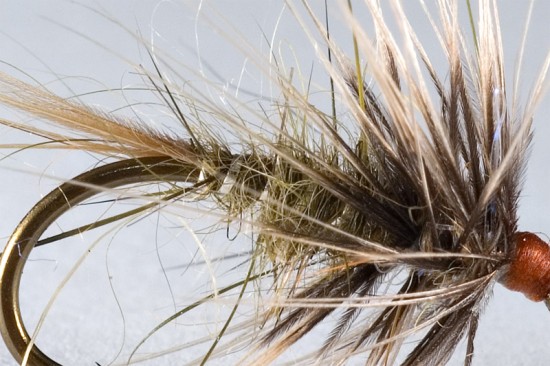
Tenkara has become my favorite way to fish for Crappie and other panfish. I have converted one of my favorite, brightly colored soft hackles into a reversed hackle, kebari style fly. I have had quite a bit of success with this pattern over the last few seasons. Sometimes it performs a little better, other times the fish prefer the pattern tied as a traditional soft hackle. On a tenkara rod this one feels right.
Pattern Recipe:
Hook: Standard wet fly ( the one pictured is an old, no longer made Mustad with a wicked barb)
Thread: 6/0 Uni your choice of color
Body: Chartreuse Ice Dub
Thorax: Pink Ice Dub
Hackle: Hen pheasant tied reversed
Wednesday, May 25, 2011
A Piece of Fly Fishing History
A few months back I picked up a Thompson Wet Fly Wing Forming Tool. This tool was popular back in the days when wet fly fishing was the standard method of presenting a fly to a trout. When I purchased the tool it came with only three combs I was fortunate to find three additional combs of different sizes on eBay a few days back. I have not used it yet since up to a few days ago I did not have the appropriate sized comb for the size flies I was looking to tie. I'll put up another post with the finished product and the steps taken to get there.
Monday, February 21, 2011
Soft Hackles
| Soft Hackles |
Granted simply changing dubbing is not a huge departure from the norm, but I really like the way spiky dubbing on these soft hackles look, they will definitely catch em...
Monday, February 14, 2011
Wet Flies...
Over the weekend I went out to the Fishing Creek Angler B&B for a weekend of fly tying under the tutelage of a master fly tier by the name of Don Bastian. I have known Don for many years, fished with him a few times and spent many hours at his table at area fly shows chatting about traditional wet flies. He is THE authority on traditional wet flies and probably one of the best tiers in the world of these forgotten patterns. Hatches Magazine has been showcasing some of Don's work with their feature on the Ray Bergman Collection. This photographic collection of traditional wet fly patterns, recipes, and notes, when completed, will contain four-hundred eighty-three flies selected from Ray Bergman’s books.
Seven of us spent a weekend eating and drinking far to much and even managed to tie a few flies. We actually did quite a bit of fly tying, much more than anticipated. Our hosts Lee and Mary Ann at the Fishing Creek Angler were awesome and the accommodations were excellent. I would highly recommend this B&B that caters to fisherman and features a full service fly shop.
I have always been fascinated and somewhat intimidated by these beautiful flies. I am still fascinated but no longer intimidated, with the knowledge gained this weekend I will be spending a lot of time perfecting traditional wet flies.
Seven of us spent a weekend eating and drinking far to much and even managed to tie a few flies. We actually did quite a bit of fly tying, much more than anticipated. Our hosts Lee and Mary Ann at the Fishing Creek Angler were awesome and the accommodations were excellent. I would highly recommend this B&B that caters to fisherman and features a full service fly shop.
I have always been fascinated and somewhat intimidated by these beautiful flies. I am still fascinated but no longer intimidated, with the knowledge gained this weekend I will be spending a lot of time perfecting traditional wet flies.
Friday, October 29, 2010
More Fall Fishing
This trip could have been one of the best of the year, conditions were perfect if not for one thing...leaves. The day dawned cloudy, wet and warm. The forecast was a 80% chance of rain but no wind and temps in the mid 70's. I thought for sure it would be the perfect day for chucking big meaty streamers or swinging big bright soft hackles. When I arrived on the banks of the stream my hopes were dashed, it was literally a flowing soup of leaves.
Winged wets proved more successful than soft hackles. Due to the leaves in the water my usual soft hackle presentations were out of the question. So it was short casts to small sections of open water and a hand twist retrieve of the flies. The winged wet fly presented a better profile under these conditions. Drab colors with some flash seemed to work the best.
There was absolutely no way to retrieve a streamer or work a set of wet flies with out fouling on the debris floating down stream. By picking out current seams out of the main flow you could find clearer water and willing fish. But since these were not prime lies the fish were smaller. I did get smashed by one bruiser of a brown trout as he grabbed a 10" rainbow I had hooked. The fish had fought it's way into a deeper pool and the brown came up to eat. It chased that fish right up to my feet and just waited there for almost a minute. I could have touched him with the tip of my rod. I guess he could not figure out where his lunch went and was expecting it would scoot out from some unseen hiding place. I tossed the rainbow back into another current seam and hoped he made it back to the safety of shallow water. The day produced loads of fish but nothing bigger than 12".
Winged wets proved more successful than soft hackles. Due to the leaves in the water my usual soft hackle presentations were out of the question. So it was short casts to small sections of open water and a hand twist retrieve of the flies. The winged wet fly presented a better profile under these conditions. Drab colors with some flash seemed to work the best.
Sunday, October 24, 2010
Bamboo Day
Over the weekend my club on the South Branch of the Raritan River did something a little different. We rolled back the clock 50 or 60 years. Fishing would be done with bamboo rods and the only flies that could be used were dry flies or wet flies. Fortunately I had recently taken possession of my first bamboo rod. This rod was built by a local rob builder and friend, Art Port. Art had fished with me last fall and at the end of the day he opened up his truck and let me look over the 30 or so rods he had in the vehicle. I was looking for a 5wt primarily for fishing wet flies. So we picked out a half a dozen rods, strung them up with some soft hackles and cast them in the "home pool" of our club. I stood in the river making a few casts and actually connecting with a few fish and Art stood on the bank handing me the different rods to try. It was a tough decision but I settled on a Garrison 209E, a 7'9", 5 wt designed by Everett Garrison and written about in Hoagy B. Carmichael's book, A Master's Guide to Building a Bamboo Fly Rod. Art built an identical rob for me with the only changes made being a flamed blank and blued hardware.
Yesterday was my first opportunity to fish this rod, and it performed wonderfully. Fishing wet flies is my favorite way to target fall trout here in New Jersey. I prefer a longer rod for this style of fishing and bamboo has some limitations when it comes to length especially if you want to keep the weight down.
But the softer action of bamboo is absolutely perfect for fishing wet flies. The action on this rod was perfect for fishing wet flies. Yesterday the fish preferred soft hackles on the swing. The fly patterns I picked up from Blue Ribbon Flies worked very well. These two patterns were the top producers of the day.
Full Dressed Red
September's Song
This fly rod handled fish up to about 20" in length with ease and despite its softer feel had quite a bit of backbone which helped in bringing some of the larger fish to hand.
At the end of the day I had the opportunity to do a little dry fly fishing although my "dry fly" was a size 18 Starling and Purple fished in the film. The rod was a pleasure to fish dries with as well. We could never identify what the fish were taking but it did not matter since they eagerly gobbled up the small soft hackles on a dead drift.
I gave the rod to my buddy Lou from Fly and Fin at the end of the day and he did well picking up these surface feeders on small soft hackles, picking up a couple of fish in a few casts.
This could be the start of a very expensive addiction...
Thursday, October 14, 2010
Great Wet Fly Blog
Posted using BlogPress from my iPad
Wednesday, October 13, 2010
Fall Wet Flies
Fall is my favorite time to swing wet flies for trout. In past years I have found that during the autumn, trout aggressively take large wet flies fished on the swing. The fish seen to prefer the bright gaudy stuff, red and orange being some of the most effective colors. One of my favorites is the Queen of the Waters
On my trip out to Montana this year I was speaking to the folks at Blue Ribbon Flies and they are big fans of fishing big soft hackles in the fall as well. The patterns that they use on the big lake fish coming up into the Madison and it's tributaries are also brightly colored, with red and orange being common themes.
This year I will be trying some of these western patterns on my home waters.
Full Dressed Red
Shakey Beeley
Lucky Bucky
September's Song
On my trip out to Montana this year I was speaking to the folks at Blue Ribbon Flies and they are big fans of fishing big soft hackles in the fall as well. The patterns that they use on the big lake fish coming up into the Madison and it's tributaries are also brightly colored, with red and orange being common themes.
This year I will be trying some of these western patterns on my home waters.
Full Dressed Red
Shakey Beeley
Lucky Bucky
September's Song
- Posted using BlogPress from my iPad
Wednesday, May 19, 2010
Hatches Fly Tying highlights one of my favorites...The Flymph
Photo by Hatches Fly Tying Magazine
The Flymph is one of my all time favorite panfish patterns. Hatches Fly Tying Magazine blog is featuring this pattern and showing step by step tying instructions. Simple but oh so effective...
Sunday, January 31, 2010
The Willowfish Fly Company Panfish Slayer
My seven year old son William tied some wet flies for panfish with odds and ends lying on the desk as I tied up a bunch of "hot butt" pheasant tail nymphs. I am very impressed with his tying. He managed to turn out three flies all on different sized hooks that looked identical, a feat I still have trouble mastering sometimes. I helped him out from time to time but for the most part he tied these on his own.
He proudly showed the flies to his mother and announced he is going into business selling flies. I love his company name but I think his five dollar a piece price tag was a little steep! It will be the best fifteen dollars I ever spent if he keeps his interest in fly tying.
Recipe:
Hook: 2X long nymph hook (size 8-12)
Tail: Pheasant tail
Abdomen: Green Ice Dub
Thorax: UV Pink Ice Dub
Hackle: Pheasant rump feathers
Thread: 3/0 black (heavy yes, but he doesn't break it as often)
These flies should tear up the bluegill and crappie next spring, hell I bet they would do a number on trout if they were scaled down in size.
He proudly showed the flies to his mother and announced he is going into business selling flies. I love his company name but I think his five dollar a piece price tag was a little steep! It will be the best fifteen dollars I ever spent if he keeps his interest in fly tying.
Recipe:
Hook: 2X long nymph hook (size 8-12)
Tail: Pheasant tail
Abdomen: Green Ice Dub
Thorax: UV Pink Ice Dub
Hackle: Pheasant rump feathers
Thread: 3/0 black (heavy yes, but he doesn't break it as often)
These flies should tear up the bluegill and crappie next spring, hell I bet they would do a number on trout if they were scaled down in size.
Wednesday, November 11, 2009
Queen Of The Waters
Over the last few years I have been experimenting with some of the traditional wet fly patterns and methods of fishing them. In recent years there has been a growing interest in these patterns and techiniques. It's hard to imagine that 40-50 years ago this was the most popular way to fish with a fly rod. I have discovered that these methods are just as effective today as it was then.
This fly has become one of my favorites. Fish this fly with any of the standard wet fly presentations. I have found it particularly effective any time there are caddis on the water.
Recipe:
❖ Hook: Mustad 3399 10-14
❖ Thread: Black Uni 6/0
❖ Dubbing: Orange seal fur (seal may be hard to find so feel free to substitute any natural or synthetic orange dubbing) or orange silk depending on whether you want a buggy or trim looking fly. The pictured fly has a dubbed body.
❖ Hackle: Brown hen neck hackle (oversized) tied palmer.
❖ Wing: Natural teal flank feather (or substitute mallard)
Tying Instructions:
Tie in thread near eye of hook and wrap to the rear stopping at a point directly over the barb of the hook.
Tie in your brown hackle by the tip.
Apply dubbing to thread and wrap forward forming a trim body (do not apply too much dubbing)
Palmer brown hackle forward, stroking back the fibers as you wrap forward and tie off.
Tie in a bunch of teal flank fibers over the top of the fly. The length of the wing should be even with the end of the hook.
Build up a neat thread head, whip finish and apply head cement.
On this particular fly several layers of cement were applied starting with thin penetration cement and finishing with a black lacquer cement to give the fly glossy black head. This step is optional and is for aesthetics only (I doubt it matters to the fish).
Tying Tips:
I tie this fly is sizes 10 -14. I have also seen the pattern tied with a tail of brown hackle fibers, the addition of a separate brown hackle collar and even gold wire ribbing. You may wish to add one or all of these options.
Note: the original Ray Bergman pattern called for a silk body and brown hackle tied palmer (no tail, dubbing, collar or ribbing).
Subscribe to:
Posts (Atom)